
Jumbie Jam - Music/Resources
Ode to Joy - Beethoven
Jumbie Jam Play Along
Baja - Traditional Calypso
Jumbie Jam Play Along
Soda Pop - KPop Demon Hunters
Jumbie Jam Play Along
Core - G2g Jumbie Jam Book 1
Jumbie Jam Play Along
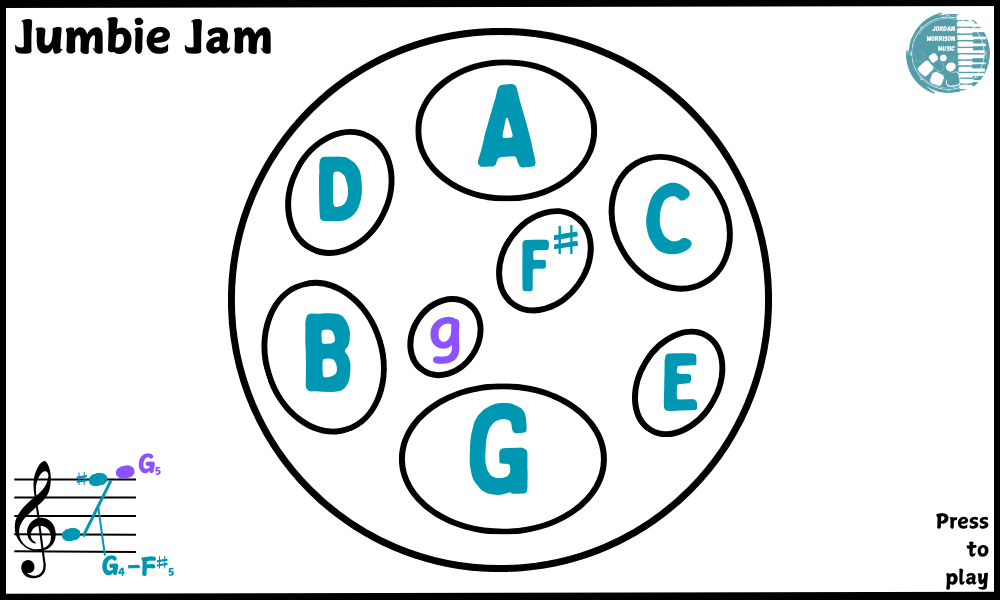
Virtual Jumbie Jam!
Click to play!

This Caribbean Classic is a great simple tune that I have simplified even more to be accessible to early pannists and Jumbie Jammers. The iconic notation is great for absolute beginners to learn and cross compare with real notation. The Rhythm Grid Notation is perfect for those with a good sense of rhythm but little reading ability. The Standard Notation is for those who are ready to translate the page to the pan. Use this to help progress from no reading ability or use it in the classroom to differentiate for the needs of your learners!
The backing track is perfect to play along with or to learn to improvise. Pannists can play anything in the key of G maj and Jumbie Jam players can play ANY NOTES on the pan (as long as you have a G Jumbie)! I hope you and your band enjoy playing this tune!

These graphics are perfect for creating your own handouts, worksheets, arrangements, compositions, and much more. Each graphic is a .png and has a transparent background so you can easily place them into your documents and it will look great! Enjoy!

This Caribbean classic is arranged for Jumbie Jam, Ukeleles (or other chording instruments), and Hand Drums. This is great for Elementary classes, Jumbie learners, and more.
This was arranged as part of an OMEA Clinic I presented called “Creating or re-energizing an alternative music ensemble in your K-8 classroom”. I hope you enjoy!

This Reggae classic is arranged for Jumbie Jam, Ukeleles (or other chording instruments), and Hand Drums. This is great for Elementary classes, Jumbie learners, and more.
This was arranged as part of an OMEA Clinic I presented called “Creating or re-energizing an alternative music ensemble in your K-8 classroom”. I hope you enjoy!

Difficulty - Easy
This simplified arrangement was put together for my Band at W O Smith Music School. This classic is a great simple tune that I have simplified even more to be able to play with our super young students on Jumbie Jams. They had no reading experience beforehand and this allowed them to read easily and play along with the older students on the full band setup. As you will see, this is not a fully polished arrangement (I apologize for any notaFon flubs since this was not done on my normal soHware) where you can simply start at the beginning and play to the end. The goal here was to get the Melody + Harmony down on paper and call the form and solos out in real Fme. I also included a viable ending that could be changed as needed. You can really piecemeal it together however you would like by calling out repeats, solos, and the ending in real Fme.
There are parts for T, DS, G, B and Drums and there is an “Jumbie Jam” part. This was created for our younger students to read the note names in the note heads easily and the Tenor part gives the older kids get a bit meaFer version of the melody with some fills. For solos, I just gave them the notes for the G major scale and said to start there but feel free to explore past those notes when you want. Jumbie Jam players can play ANY notes since it’s in the key of G! I hope you and your band enjoy playing this tune!

Work on real treble clef note reading skills with this Jumbie Jam Note Reading Chart. Print for your classroom, reference, etc.

These 3 pages go together and can be used as an intro to the 3 instruments or as a daily class warmup. The simple symbolic notation makes it perfectly accessible for elementary classes but it doesn’t look childish so older students or adults could use it unselfconsciously.
These were developed as part of an OMEA Clinic I presented called “Creating or re-energizing an alternative music ensemble in your K-8 classroom”.
Short 8 question Jumbie Jam themed crossword puzzle focused on steelpan vocab and steelpan history.